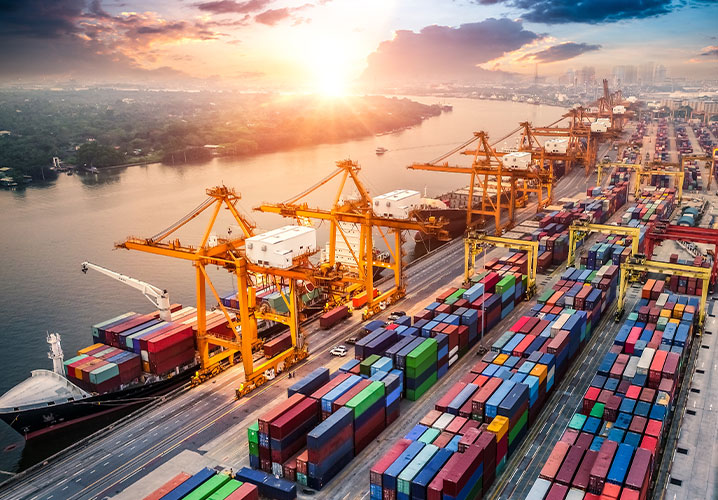

Transport damage: understanding the causes and taking precautions
Transporting goods by road, rail, sea, and air has always been essential for global trade. However, losses, damage, or delays can disrupt the supply chain and result in financial losses.
Companies that transport goods and merchandise by land, sea, or air are exposed to a wide range of risks. As a result of globalisation and international economic development, transport routes are becoming longer, supply chains more complex, and the risks associated with the transport of goods increasingly multifaceted. But what are the most common causes of transport damage? A well-thought-out insurance policy can minimise the financial consequences and protect the company from unexpected losses.
Accidents, theft, fire: the most common causes of transport damage
Transport risks refer to all the hazards to which goods are exposed during transit, from loading to arrival. These include physical damage, loss or theft, as well as logistical and legal risks that can disrupt supply chains. The most common causes of transport damage are:
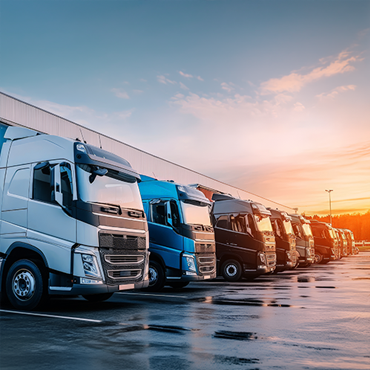
- Accidents during loading and unloading, or damage to goods: Much transport-related damage is caused by mechanical forces acting on the goods. This includes accidents during loading or unloading, as well as damage caused by impacts, pressure, or vibrations during transit. Inadequate packaging and unsecured loads also play a role. All of these factors increase the risk of breakage, deformation, or loss.
- Fire damage or extreme weather: Extreme weather conditions, such as storms, heavy rain, intense heat, or cold, as well as natural disasters, frequently affect the ability to transport goods, regardless of the carrier.
- Piracy, terrorism, or war: Other external factors include the theft or wilful damage of goods and merchandise, for example as a result of piracy or terrorism. These risks are particularly prevalent on international supply routes.
- Delivery delays, incorrect deliveries, and customs seizures: Transport damage can be caused by physical impacts, logistical and organisational problems, or 'phantom carriers' (see the information sheet ‘Fake Carrier’ below). Incorrect or missing documentation, delivery delays, and changes to transport routes can all put safe delivery at risk. Furthermore, the company depends on freight forwarders and subcontractors, whose errors or omissions can result in direct damage.
The consequences and costs of transport risks
Damage or transport failures can have significant financial consequences for businesses. These include direct costs and consequential costs arising from delays.
Direct consequences
Damaged or lost goods, replacement deliveries, and repairs incur immediate costs. Furthermore, damaged or delayed deliveries often result in production stoppages and supply bottlenecks. Contractual penalties may also be incurred if agreed delivery dates cannot be met. The insurance terms and conditions may also be affected: recurring claims or high claim amounts often impact premiums and excesses.
Indirect consequences
In addition to these immediate financial burdens, there are further indirect consequences. For example, transport damage can harm business relationships with customers, suppliers, and partners, as delayed or damaged deliveries can erode trust in the company. Furthermore, additional organisational effort is required to document the damage, process claims and re-coordinate supply chains. In complex, international supply chains, these consequences can lead to further production delays at downstream companies, thereby exacerbating the economic impact.
Transport insurance for businesses
Funk develops customized concepts for industrial companies, trading houses, and freight forwarders that are optimally tailored to their processes.
Learn more
Companies in the industrial and commercial sectors
Bespoke transport insurance can protect companies in the industrial and commercial sectors against transport risks. Whether you require goods-in-transit insurance to safeguard your goods throughout the entire transport process or specialised solutions for refrigerated goods, project shipments, trailers, or semi-trailers, our Funk experts will gladly advise you on the most suitable transport insurance for your business.

Carriers, freight forwarders, and port and terminal operators
Sector-specific solutions benefit carriers, freight forwarders, and port and terminal operators. These include insurance for carriers' liability, liability insurance for heavy-lift operators, freight forwarding and transport insurance, and solutions for ports and terminals. There is also hull and third-party liability insurance for ships. This ensures that all relevant risks along the transport chain are covered and that operational exposure is minimised effectively.
Would you like to find out more about transport damage?
Contact us on +49 40 35914-0 or send us a message.
Get in touchYour point of contact