
Technical risks: How businesses can protect themselves
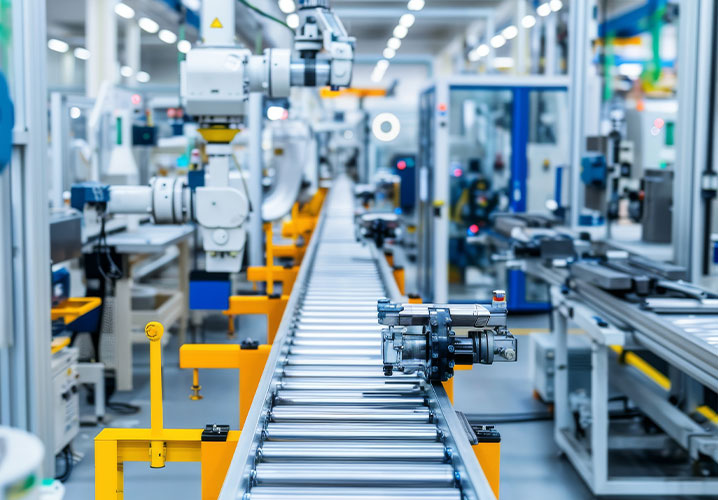
Businesses are increasingly relying on precision electronics, digital control systems, and automated production facilities. While these technologies boost efficiency and competitiveness, they also increase dependence on the reliable functioning of technical systems. If a fault or malfunction occurs, it can significantly disrupt production processes. The potential consequences of technical risks include business interruptions and subsequent financial losses.
Modern production processes rely heavily on technology. The greater the level of automation and digitalisation, the more important effective risk management becomes. This is because technical faults or equipment damage can result not only in repair costs, but also in costly production downtime.
Against this backdrop, the importance of engineering insurance is growing. It is designed to cover damage to technical systems and equipment, protecting businesses from the financial consequences of such incidents.
What are typical technical risks?
Typical technical risks include damage to technical systems and equipment that could result in the insured property being damaged or destroyed.
The following are covered:
- Stationary and mobile machinery
- Electronic systems and equipment
- Construction and installation work carried out as part of construction and installation projects
Technical insurance policies are usually structured as all-risk policies. This means that, in principle, all sudden and unforeseen damage is covered, unless it has not been expressly excluded from the scope of cover.
Damage can arise from a variety of causes. These include:
- internal operational damage caused by material or design faults, component failure, or electrical faults
- Operating and handling errors due to human error
- External influences, such as foreign objects, water, storms, or other unforeseeable events.
The more complex a company’s technical equipment, the more sensitive its systems are to external influences.
What are the most common causes of damage?
In practice, damage to technical equipment typically occurs during operation. Typical causes include operator error, material or design faults, and mechanical or electrical stresses on the equipment.
Internal operational damage may also occur as a result of material fatigue, wear and tear, inadequate lubrication, or component failure. Electrical issues, such as short circuits, overvoltage, induction and insulation faults, also commonly cause damage to technical systems.
As digitalisation increases, faults in electronic control and automation systems are becoming more significant. Errors in software or programming can result in systems malfunctioning or breaking down completely.
In addition to technical causes, human error also plays a significant role. Operational errors, incorrect operation of control systems, inadequate training, and misunderstandings regarding work instructions can also lead to damage to machinery and technical equipment.
Possible consequences include repair costs and delivery delays
Damage to technical equipment can lead to machine downtime and production stoppages. In addition to the costs of repair or replacement, this can result in significant consequential costs.
Shortages of spare parts can also delay the recommissioning of equipment. Furthermore, consequential damage to other machines or equipment may occur. Delivery delays are also a typical consequence. These can negatively impact customer relationships and a company’s reputation.
These risks emphasise the importance of adopting a structured approach to risk management that can identify technical hazards at an early stage and enable the implementation of appropriate measures to minimise risk.
The right cover for technical risks
Companies can first identify which technical risks are relevant to their plant and processes as part of their risk analyses. Suitable insurance strategies can then be developed based on this information.
Typical insurance modules include:
- Machinery insurance
- Electronics insurance
- Construction insurance
Depending on the risk situation, business interruption insurance may also be advisable.
Our experts at Funk will be happy to advise you on these insurance policies and help you limit the financial consequences of technical damage, ensuring the continuity of your business operations.
Prevention and Engineering Services
Comprehensive documentation, regular inspections and maintenance are essential to prevent technical risks and ensure safety within organisations. Technical safety concepts offer a structured approach to identifying and minimising risks. They help to establish and verify safety standards.
Our engineers support companies with risk identification, underwriting assessments, and claims handling. Support ranges from technical analysis and on-site inspections to managing complex major claims.
Would you like to find out more about technical risks?
Contact us on +49 40 35914-0 or send us a message.
Get in touch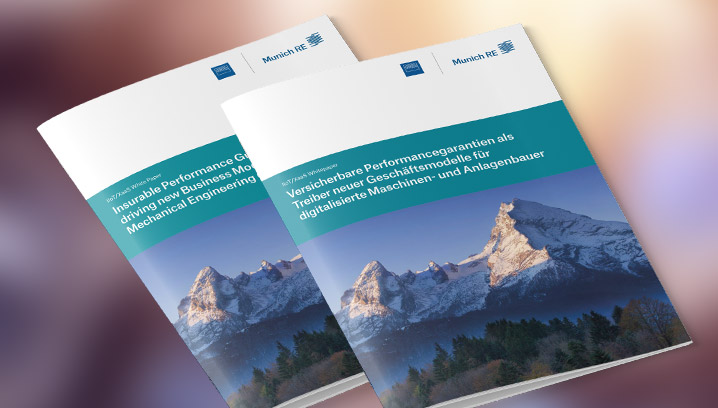
Digitalization in mechanical engineering
The mechanical and plant engineering industry is increasingly evolving into a provider of digital solutions. Innovative risk solutions can significantly support new product and service strategies in this area. Funk and reinsurer Munich Re show exactly how in a white paper that combines cross-industry expertise on business model transformations, risk management, and insurance in mechanical engineering.
Mehr erfahrenIhr Kontakt