

EU Deforestation Regulation (EUDR): Sustainability and Transparency for your Supply Chain
Find out how your company is affected by the EU Deforestation Regulation (EUDR) and how we may support your role in the supply chain – with tailored advice and innovative tools.
The EUDR at a glance
The EUDR is a decisive step in the fight against global deforestation, degradation, and conversion of forests. The regulation requires companies to make their supply chains fully traceable and transparent for certain raw materials such as palm oil, cocoa, and soya. The objective of the EUDR is to ensure that no products from deforested areas enter, are traded within, or leave the EU market. The EUDR thus strengthens the protection of natural resources by requiring companies to comply with strict due diligence obligations.
Relevance for companies
The EUDR affects companies that import, produce, or export certain raw materials into or from the EU. Compliance with the regulation requires the implementation of the following:
- The raw materials must be deforestation-free*
- Raw materials must be produced in accordance with the legislation of the country of origin
- A declaration of due diligence must be submitted by the companies affected by the EUDR
These are the raw materials concerned

Palm oil
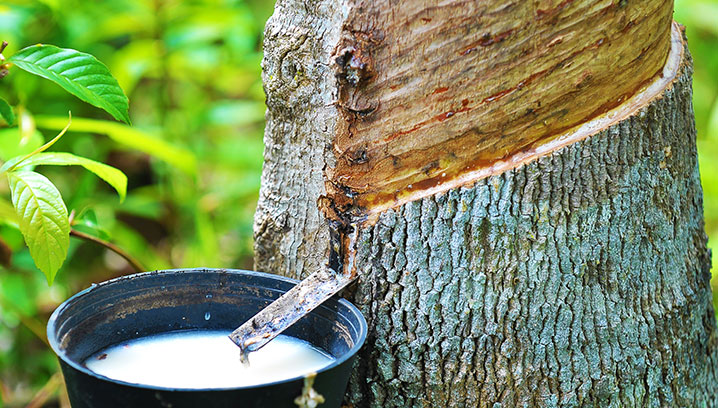
Rubber
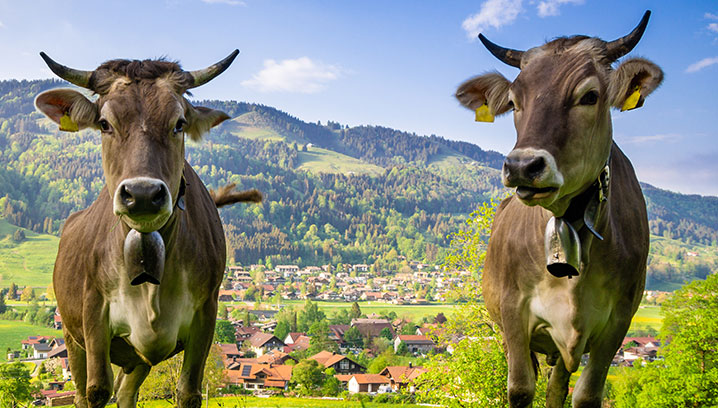
Cattle

Soya

Cocoa

Wood

Coffee
* Deforestation-free means that the relevant raw materials must not have been produced on land that was deforested after December 31, 2020 or – in the case of wood and wood products – that the wood was harvested from the forest without forest degradation having occurred after December 31, 2020. (Source: https://www.ble.de/DE/Themen/Wald-Holz/Entwaldungsfreie-Produkte/Lieferketten_node.html)
Why the EUDR remains highly relevant for companies in 2026 despite simplifications
The postponement and simplifications of the EUDR do not ease the burden on all companies to the same extent. Importers remain subject to extensive obligations, while significant simplifications apply to downstream operators – in particular, as they are no longer required to submit their own due diligence statement. A key factor is correctly determining whether a company is the first downstream operator or trader, or a further downstream operator, as the remaining obligations, although simplified, differ depending on its role in the supply chain.
Flexible support for implementing EUDR requirements
The implementation of the EUDR presents companies with very different challenges. While some companies first need clarity on whether and to what extent they are affected, others are already facing the operational implementation of the requirements or the integration of software tools and due diligence processes.
Funk Consulting supports you flexibly, according to your level of maturity and starting point, with tailored and practical solutions. We begin with an EUDR strategy workshop, in which we systematically assess your level of EUDR maturity and develop a company-specific roadmap. We then implement this roadmap together with you through flexible consulting modules, which can be used individually, in combination or as part of comprehensive support, depending on your starting point:
Module 1: Abstract vulnerability analysis
Analyzing the potential impact of the EUDR on your company as well as the scope of responsibilities emanating from the EUDR – with a focus on your own business area.
Module 2: Risk and supply chain analysis
Prioritized analysis of your company’s upstream value chain with regard to EUDR requirements.
Module 3: Tool selection and benchmarking
Derivation of specific measures based on modules 1 and 2, including a comparative market analysis with the aim of deciding in favor of a specific tool that will suit your company’s individual EUDR requirements.
Module 4: Implementation and onboarding
The last module consists of several steps that will enable your company to become EUDR-compliant: Technical support for tool implementation, expert advice on EUDR requirements, process optimization, and risk report creation.

Your advantages at a glance
Ensure a sustainable and EUDR-compliant supply chain with regard to supply chain transparency as well as securing your company’s long-term market sustainability.
- Efficient compliance with EUDR requirements by means of transparent processes and clear responsibilities
- Use of modern technologies to monitor and optimize the supply chain
- Minimizing supply and demand risks and securing market access
- Precisely tailored advice according to your individual company requirements
Training for the sustainable integration of the EUDR
Effective implementation of the EUDR requires not only clear processes, but also a consistent understanding of the requirements among all stakeholders involved. Training helps to clarify responsibilities, prevent errors in data collection and ensure that regulatory obligations are implemented effectively. We therefore offer training and e-learning formats tailored to specific target groups, both for relevant functions within EU companies (e.g. procurement, sustainability and compliance) and for suppliers and business partners outside the EU.
Learn more about our EUDR training courses here.
Become EUDR-compliant now
Fulfil the requirements of the EU Deforestation Regulation and secure your supply chain sustainably.
Contact us now without obligationYour point of contact